
Some places in Canada don’t announce themselves loudly. They don’t rely on crowds, grand entrances, or polished itineraries. Instead, they reveal themselves slowly—through the steady flow of a river, the stories shared by locals, and the quiet confidence of a community that has learned how to live well in a challenging landscape.
Norman Wells is one such place.
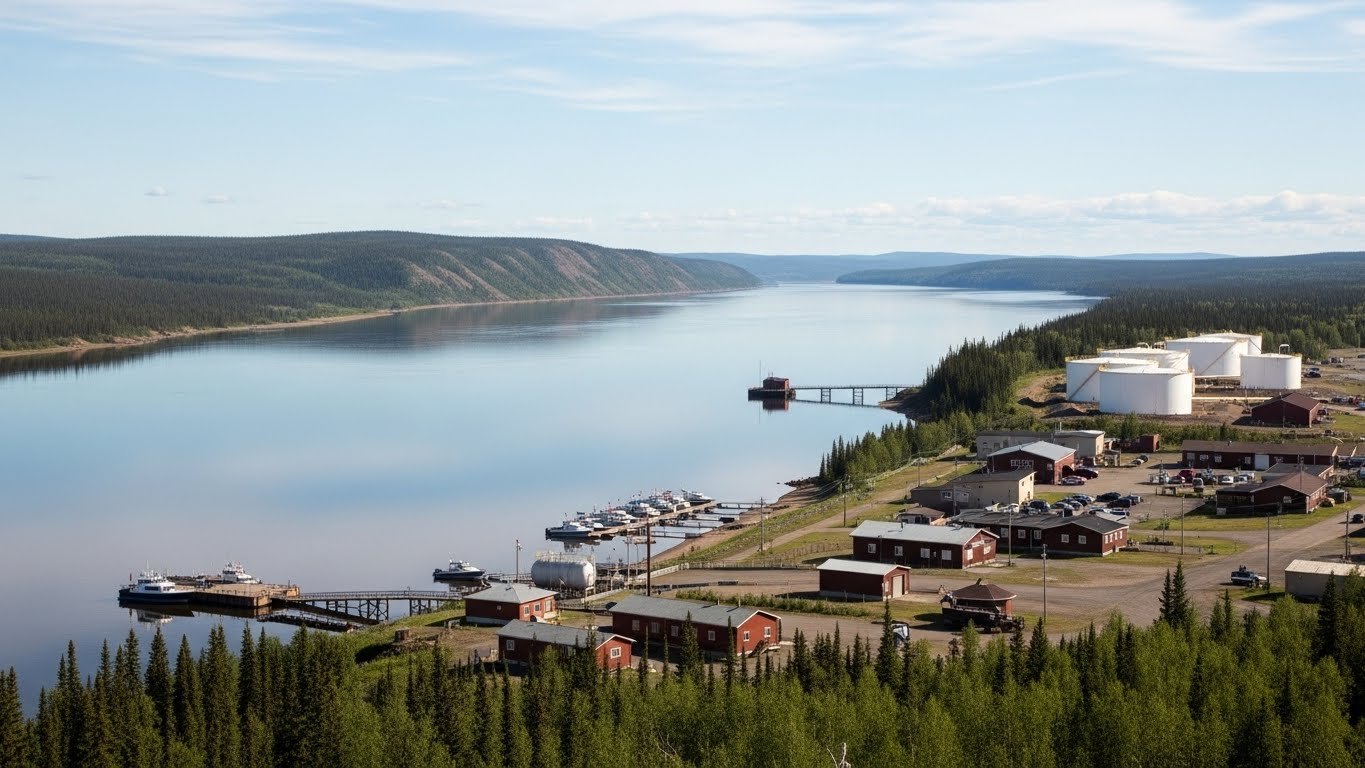
Located along the mighty Mackenzie River, Norman Wells is a small but historically significant town in the Northwest Territories. Known as Canada’s historic oil production center in the North, it combines industry, wilderness, and community life in a way that feels uniquely northern and deeply authentic.
As someone who values meaningful travel—travel that teaches rather than entertains—I find Norman Wells quietly fascinating. It is a place where nature sets the rhythm, history leaves a visible mark, and people live with a practical wisdom shaped by the river beside them.
First Impressions: A Town Anchored by Water
Arriving in Norman Wells, the first thing you notice is the river.
The Mackenzie River is not just scenery here—it is presence. Wide, calm, and commanding, it shapes the town’s layout, its history, and its daily life. Homes, roads, and community spaces seem to lean toward the water, as if listening to it.
The town itself feels compact and purposeful. There is no excess, no rush. Everything exists because it is needed—and that creates a sense of calm confidence.
Norman Wells doesn’t try to impress visitors. It invites them to observe.
The Mackenzie River: Lifeline of the Community
To understand Norman Wells, you must understand the Mackenzie River.
For centuries, this river has served as:
- a transportation route
- a source of food and water
- a cultural corridor
- a link between distant northern communities
Even today, the river remains central to how people move, work, and live. In warmer months, boats travel steadily along its surface. In winter, the frozen river becomes part of the landscape people move across with care and knowledge.
Standing along its banks, you feel the scale of northern Canada—not as something intimidating, but as something steady and enduring.
As someone who finds meaning near water, I find the Mackenzie River deeply grounding.
Historic Oil Production: Industry in the North
Norman Wells holds an important place in Canada’s industrial history. It is one of the country’s oldest oil-producing areas, with development dating back to the early 20th century.
Oil production shaped:
- the town’s establishment
- its infrastructure
- its role within the Northwest Territories
Yet what stands out most is how the community has learned to balance industry with environment and daily life. Oil exists here, but it does not dominate the town’s identity.
Norman Wells understands that survival in the North requires responsibility—toward land, water, and future generations.
As a former teacher, I admire places that learn from their history rather than becoming trapped by it.
A Community Built on Purpose
Norman Wells is small, but it feels complete.
People here rely on one another. Services exist because they are essential. Relationships matter because isolation makes cooperation necessary.
You sense quickly that this is a town where:
- neighbors know one another
- help is offered without hesitation
- time is respected
- practicality is valued
As a mother and homemaker, I see the beauty in this kind of living. It strips life down to what truly matters.
Indigenous Heritage and Cultural Respect
The region around Norman Wells has long been home to Indigenous peoples whose knowledge of land and river life runs deep. Their presence and influence continue to shape the area’s identity.
Connections to the Dene culture are visible through:
- respect for traditional land use
- storytelling and oral history
- community values centered on balance and care
What I appreciate most is the quiet respect embedded in daily life. Culture here is not performative—it is lived.
Travelers who arrive with openness often leave with a greater understanding of how Indigenous knowledge sustains northern communities.
Scenic Beauty Without Crowds
Norman Wells offers scenic beauty in its most honest form.
There are no dramatic viewpoints built for photographs, no crowds lining trails. Instead, beauty appears in:
- the slow bend of the river
- soft northern light stretching across water
- forests standing resilient against wind and cold
- skies that seem impossibly wide
This is the kind of beauty that asks you to slow down.
For travelers who prefer reflection over rush, Norman Wells feels like a gift.
Outdoor Experiences Rooted in Reality
Outdoor life in Norman Wells is not a hobby—it is a way of living.
People here fish, walk, boat, and travel outdoors because it is part of daily life. Visitors are welcome to experience nature, but always with respect.
Activities include:
- river walks and shoreline exploration
- boating during summer months
- wildlife observation
- winter snow travel and quiet contemplation
The emphasis is on awareness rather than adventure tourism. You are encouraged to understand the land before enjoying it.
As someone who believes nature should be approached with humility, I find this approach deeply reassuring.
Seasons That Shape the Soul
Summer
Long daylight hours bring warmth, river activity, and a sense of openness. Life expands outward, and the town feels gently alive.
Autumn
A time of preparation. Supplies are secured, routines shift, and the land begins to rest.
Winter
Cold, quiet, and deeply introspective. Darkness encourages connection indoors, conversation, and patience.
Spring
A season of waiting and renewal. Ice breaks, the river moves again, and life slowly returns.
Each season teaches something different about resilience and respect.
Food, Warmth, and Northern Hospitality
Food in Norman Wells is about nourishment and care.
Meals reflect what is available and practical. There is comfort in shared tables, warmth in simple dishes, and generosity in how food is offered.
As a lifelong cook, I know that food is one of the clearest ways a community expresses care. In Norman Wells, meals feel honest—just like the town itself.
Traveling to Norman Wells: A Mindset Shift
Norman Wells is not a place you rush through. It is a place you adapt to.
Travelers are rewarded when they:
- slow their expectations
- listen more than they speak
- observe daily rhythms
- respect the land and community
This is not a destination for checklists. It is a destination for presence.
Who Norman Wells Is Perfect For
Norman Wells is ideal for travelers who:
- enjoy quiet, reflective destinations
- appreciate history rooted in real life
- want to understand northern communities
- value nature without commercialization
It may not suit those seeking luxury—but it deeply rewards those seeking understanding.
What Norman Wells Teaches
Norman Wells teaches us that:
- rivers shape civilizations
- industry and nature can coexist thoughtfully
- community matters more than convenience
- resilience grows from respect
Standing beside the Mackenzie River here, you feel connected not just to a place—but to a way of living that values balance.
A Town That Lives With the Land
Norman Wells does not conquer its environment. It lives alongside it.
This relationship is built on:
- patience
- knowledge
- adaptation
- care
As someone who believes meaningful living comes from understanding limits, I find Norman Wells quietly inspiring.
💚 Final Reflections
Norman Wells is not loud, flashy, or widely known—and that is precisely its strength.
From its position along the Mackenzie River, to its role in northern oil history, to its calm community life surrounded by wilderness, Norman Wells offers travelers something increasingly rare: authentic northern truth.
If you arrive with curiosity instead of expectation, with respect instead of urgency, this small town will teach you far more than any guidebook ever could.
As Octavia O—teacher, mother, cook, traveler, and lifelong learner—I can say this with confidence:
Norman Wells doesn’t try to leave an impression. It leaves understanding.