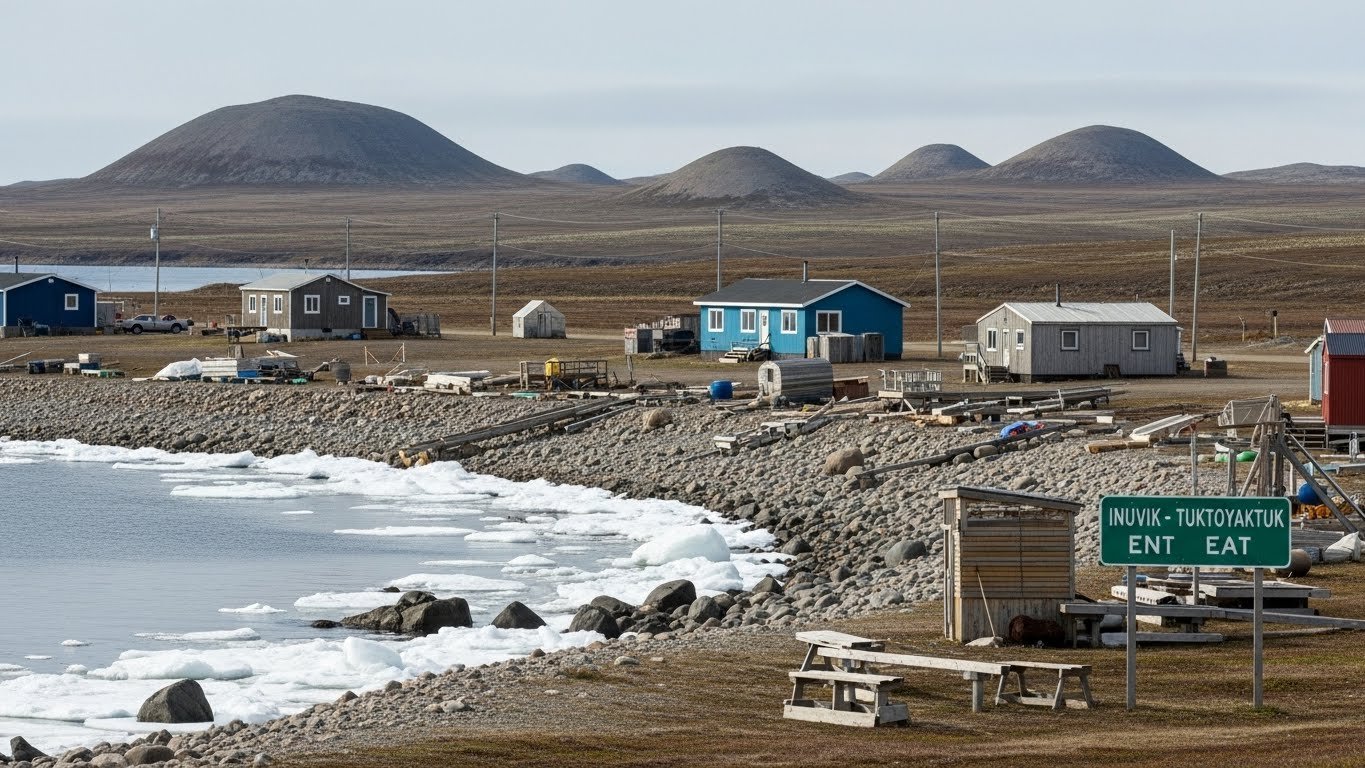

There are destinations that feel like an ending—and others that feel like a beginning. Tuktoyaktuk is both.
Perched on the edge of the Arctic Ocean, this small northern community carries a sense of arrival that few places on Earth can offer. For many travelers, Tuktoyaktuk is the symbolic finish line of an epic journey north—the place where land finally gives way to ice-cold waves, where maps feel complete. For the people who live here, however, Tuktoyaktuk is not an endpoint at all. It is home. It is history. It is continuity.
As someone who values places where culture, land, and family are deeply intertwined, I find Tuktoyaktuk profoundly moving. It doesn’t perform the Arctic for visitors—it lives it, quietly and confidently.
First Impressions: The Feeling of the Far North
Arriving in Tuktoyaktuk, you immediately feel the difference.
The air is sharper. The horizon feels wider. The landscape is open and elemental, shaped by wind, permafrost, and water. There are no tall trees here—only low tundra stretching toward the sea, reminding you that survival in this region has always depended on knowledge, cooperation, and respect for nature.
Tuktoyaktuk does not overwhelm you. It humbles you.
Life on the Arctic Ocean
Living beside the Arctic Ocean shapes everything in Tuktoyaktuk.
The ocean has long provided:
- food and sustenance
- travel routes
- cultural identity
- connection to seasonal cycles
For generations, the people of Tuktoyaktuk have understood the rhythms of sea ice, tides, and weather in ways that go far beyond maps or forecasts. The ocean here is not scenery—it is relationship.
Standing on the shoreline, many travelers experience a quiet moment of awe. The water is cold, powerful, and endlessly moving. It reminds you how far north you truly are—and how resilient the people here must be.
Inuvialuit Culture: Living Arctic Heritage
Tuktoyaktuk is a proud Inuvialuit community, and Indigenous culture is the heart of daily life.
Inuvialuit traditions shape:
- hunting and fishing practices
- storytelling and oral history
- community values
- respect for elders and land
What I admire most is how naturally this culture is lived. It is not staged for visitors. It continues through families, seasonal activities, and shared knowledge passed down across generations.
As a former teacher, I find this deeply meaningful. Tuktoyaktuk shows how education can exist beyond classrooms—rooted in experience, environment, and intergenerational trust.
Pingos: Nature’s Arctic Sculptures
One of Tuktoyaktuk’s most fascinating features is its surrounding pingos—rare ice-cored hills formed by freezing groundwater beneath permafrost.
These natural formations are unique to Arctic regions and are among the most recognizable landmarks of the area. Rising gently from the tundra, pingos feel almost otherworldly—quiet reminders of the powerful geological forces at work beneath your feet.
For travelers, seeing pingos offers a deeper appreciation of the Arctic landscape. This is not static land. It is living, shifting, and sensitive.
The Inuvik–Tuktoyaktuk Highway: A Road Like No Other
For decades, Tuktoyaktuk could only be reached by air or seasonal ice roads. That changed with the completion of the Inuvik–Tuktoyaktuk Highway, Canada’s first all-season public road to the Arctic Ocean.
This highway transformed access—but not identity.
For travelers, driving this road is a once-in-a-lifetime experience. The journey itself is part of the destination, passing through tundra, wetlands, and open northern skies.
For the community, the road provides:
- year-round access
- improved supply routes
- stronger connections to the rest of the North
What matters most is how thoughtfully this change has been integrated—without erasing the community’s values or pace of life.
A Community Built on Cooperation
Tuktoyaktuk is small, but its sense of community is strong.
People rely on one another here. Weather, distance, and environment make cooperation essential rather than optional. Children grow up understanding responsibility early. Elders hold respected roles as knowledge keepers.
As a mother, I find this deeply reassuring. It reminds me that strong families and communities are built through shared care, not convenience.
Seasons That Shape the Soul
Summer
Brief but vibrant. Long daylight hours bring fishing, boating, and community gatherings. The ocean opens, and life expands outward.
Autumn
A season of preparation. Supplies are secured, and the land begins to quiet.
Winter
Long, cold, and transformative. Ice reshapes the world, and life turns inward toward family and tradition.
Spring
A delicate transition. Ice breaks, movement returns, and patience is rewarded.
Each season teaches adaptability—a lesson the Arctic offers generously.
Food, Sharing, and Warmth
Food in Tuktoyaktuk reflects both tradition and practicality.
Meals are about nourishment, sharing, and respect for what the land and sea provide. Hospitality is genuine and generous, especially in a place where warmth—both physical and emotional—matters deeply.
As someone who believes food is one of the strongest expressions of love and community, I find this aspect of Tuktoyaktuk especially touching.
Visiting with Respect
Tuktoyaktuk welcomes visitors, but it also asks something in return: respect.
Travelers are encouraged to:
- learn before photographing
- listen more than speak
- respect local customs
- understand the fragility of Arctic environments
This is not a place to rush through or consume. It is a place to observe, learn, and appreciate.
Who Tuktoyaktuk Is Perfect For
Tuktoyaktuk is ideal for travelers who:
- want to reach the Arctic Ocean by road
- are curious about Indigenous Arctic cultures
- value quiet, meaningful destinations
- respect nature and community
It may challenge comfort zones—but it rewards curiosity.
What Tuktoyaktuk Teaches
Tuktoyaktuk teaches us that:
- endings can also be beginnings
- culture survives through daily life
- nature deserves humility
- resilience grows from community
Standing at the Arctic Ocean, you realize how small you are—and how connected everything truly is.
A Place That Knows Who It Is
Tuktoyaktuk does not try to reinvent itself for visitors.
It remains:
- proudly Inuvialuit
- deeply Arctic
- community-centered
- rooted in land and sea
That confidence is its greatest strength.
💙 Final Reflections
Tuktoyaktuk is not just the end of a highway—it is a living reminder of how people thrive at the very edge of the continent.
From its Arctic Ocean shores to its unique pingos, from the historic arrival of the Inuvik–Tuktoyaktuk Highway to the enduring strength of Inuvialuit culture, Tuktoyaktuk offers travelers something rare: authentic Arctic truth.
As Octavia O—teacher, mother, cook, traveler, and lifelong learner—I believe this deeply:
If you come to Tuktoyaktuk with humility and curiosity, you won’t just reach the end of the road.
You’ll arrive at a deeper understanding of what it means to live in harmony with the North.