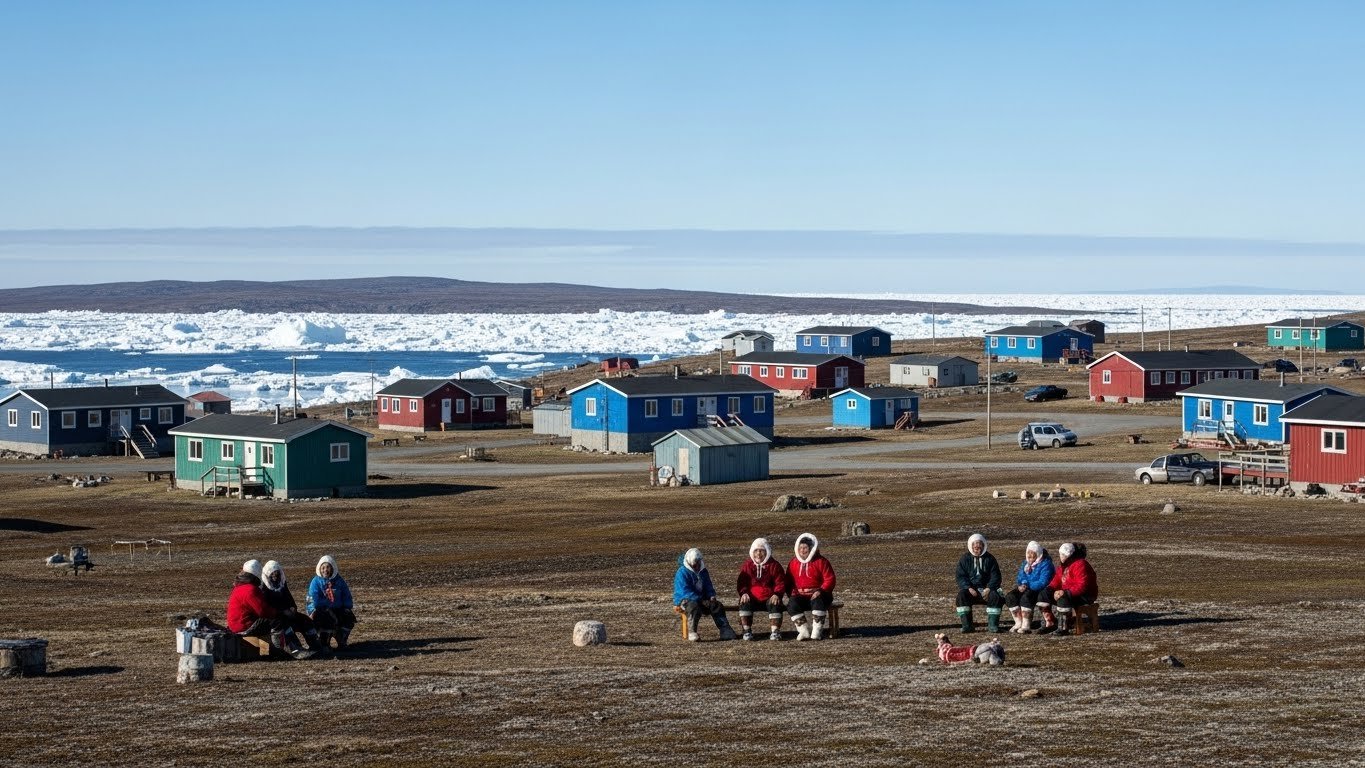

There are destinations you visit for scenery, and then there are places you visit to understand a way of life. Igloolik belongs firmly to the second kind. Located north of the Arctic Circle, this small but profoundly important Inuit community is one of the cultural heartlands of the Canadian Arctic—a place where history is not locked in museums, but spoken, practiced, and passed on every day.
As a former teacher, a mother, and a lifelong learner who has always believed that wisdom lives in people as much as in books, I find Igloolik deeply moving. To travel here is not simply to see the Arctic—it is to listen to it, through voices that have carried knowledge across generations.
If you are a traveler drawn to culture, storytelling, and meaning beyond the surface, Igloolik offers an experience that is quiet, powerful, and unforgettable.
Where Igloolik Sits in the Arctic World
Igloolik is located on a small island off the coast of Baffin Island, well north of the Arctic Circle. The land here is low, open, and expansive, shaped by wind, ice, and time. There are no towering mountains dominating the horizon—instead, the beauty of Igloolik lies in its vastness, its skies, and its sense of continuity.
The surrounding sea ice and waters have been essential travel routes and hunting grounds for centuries. Long before modern maps, Inuit knowledge defined safe paths, seasonal rhythms, and survival strategies in this environment.
Standing here, you quickly understand that Igloolik is not remote—it is deeply connected to the Arctic world around it.
A Place of Deep Historical Importance
Igloolik holds exceptional historical and cultural significance within Inuit history. Archaeological evidence shows that Inuit ancestors lived and traveled through this region for thousands of years, making it one of the most important long-standing cultural centers in the Arctic.
What makes Igloolik remarkable is not only its age, but its continuity. Stories told today often trace directly back to ancestors who lived on the same land, followed the same animals, and read the same skies.
For travelers, this creates a rare opportunity: to encounter a living history that has never been broken.
The Meaning of Igloolik
The name Igloolik comes from the Inuktitut word iglu, meaning “house.” Historically, the area was known for its many traditional snow houses used seasonally by Inuit families.
This name reflects something deeper than architecture—it speaks to belonging, shelter, and community. Igloolik has long been a gathering place, a hub of shared knowledge, ceremony, and storytelling.
Even today, there is a strong sense that this is a place where people come together—not only physically, but culturally and spiritually.
Preserving Traditional Inuit Knowledge
Igloolik is widely known for its role in preserving traditional Inuit knowledge, often referred to as Inuit Qaujimajatuqangit—knowledge that encompasses values, skills, worldview, and relationships with the land.
This knowledge includes:
- understanding ice conditions and weather patterns
- hunting techniques and animal behavior
- navigation without modern instruments
- oral history, legends, and teachings
- community ethics based on cooperation and respect
What moved me most is how naturally this knowledge is shared. Elders teach by example. Young people learn through participation. Knowledge is not rushed—it unfolds as life does.
As a former teacher, I found this approach deeply inspiring. Education here is not separated from life; it is life.
A Community Rooted in Storytelling
Igloolik is often described as one of the great storytelling centers of the Inuit world. Stories here are not entertainment alone—they are tools for memory, survival, and moral guidance.
Through stories, people learn:
- where not to travel
- how to behave toward others
- how to respect animals and land
- how ancestors faced hardship
In the Arctic, stories are maps, laws, and lessons combined.
Travelers who take time to listen—truly listen—may begin to understand why oral traditions have endured so powerfully here.
Igloolik and Documentary History
Igloolik has been featured in documentaries and cultural studies not because it seeks attention, but because of its dedication to cultural preservation and self-representation.
Local filmmakers, storytellers, and cultural leaders have worked to ensure that Inuit voices tell Inuit stories—on their own terms.
These films and studies have helped the world better understand Arctic life beyond stereotypes, showing complexity, humor, resilience, and creativity.
For visitors, knowing this context adds depth. You are not entering a place defined by outsiders—you are entering a community that speaks for itself.
Daily Life in Igloolik
Daily life in Igloolik is shaped by balance—between tradition and modernity, community and individuality, nature and adaptation.
You may see:
- elders sharing stories with children
- hunters preparing equipment with quiet focus
- artists working thoughtfully on carvings or drawings
- families gathering, sharing food, and supporting one another
There is a calm rhythm to life here. People plan carefully. They observe closely. They value patience.
As someone who has raised a family and managed a household, I felt a deep appreciation for this thoughtful pace. Nothing feels wasteful—not time, not resources, not relationships.
Food, Sharing, and Cultural Values
Food in Igloolik is deeply connected to culture and respect for the land.
Traditional foods—harvested through hunting and fishing—carry knowledge passed down through generations. These practices teach responsibility, gratitude, and restraint.
Equally important is the tradition of sharing. Food is not just sustenance; it is a social bond. Those who have share with those who need.
This spirit of generosity is one of the most beautiful aspects of life in Igloolik, and one that visitors often remember most.
Art as Cultural Memory
Art in Igloolik is not separated from daily life. It is a way of remembering, teaching, and expressing identity.
Artwork often reflects:
- legends and spiritual beliefs
- hunting scenes and animals
- family life and humor
- Arctic landscapes and seasons
Each piece carries meaning beyond its surface.
As someone who values creativity as a form of communication, I found Igloolik’s artistic traditions deeply moving. Art here is not made for trends—it is made for truth.
The Arctic Environment: Subtle and Powerful
Igloolik’s environment may appear stark at first glance, but it reveals its beauty slowly.
The light changes constantly. The sky tells stories. Ice shifts and breathes. Wildlife moves with purpose.
This is a land that teaches observation. You learn to notice small changes—the direction of wind, the texture of snow, the sound of ice.
Travelers who slow down often discover that this subtle beauty becomes profoundly rewarding.
Seasons and Survival
Life in Igloolik is shaped by strong seasonal contrasts.
- Winter brings darkness, cold, and closeness. It is a time for storytelling, reflection, and creativity.
- Spring is cautious and hopeful, as ice conditions change.
- Summer brings light, movement, and energy, with long days and community activity.
- Autumn is a time of preparation and transition.
Each season reinforces the importance of knowledge, patience, and cooperation.
Visiting Igloolik with Respect
Igloolik is welcoming, but it is first and foremost a home.
Respectful travel means:
- being mindful of photography
- listening more than speaking
- understanding that traditions are living, not performative
- accepting that not everything is meant to be shared publicly
Visitors who approach Igloolik with humility often leave with insight that no guidebook can provide.
Why Igloolik Matters Today
In a rapidly changing world, Igloolik stands as a reminder that progress does not require forgetting the past.
This community shows us that:
- traditional knowledge remains relevant
- cultural identity strengthens resilience
- listening to elders is a form of wisdom, not nostalgia
As climate change and global pressures reshape the Arctic, places like Igloolik offer lessons the world urgently needs.
A Personal Reflection
As Octavia—teacher, mother, traveler, and food-loving homemaker—I see Igloolik as a kind of living classroom.
It teaches patience in a rushed world. It teaches listening in a noisy one. It teaches respect in a time of consumption.
Igloolik does not ask visitors to admire it—it asks them to understand.
💙 Final Thoughts
Igloolik is not a destination for hurried travelers or checklist tourism. It is a place for those willing to slow down, open their hearts, and learn.
Located north of the Arctic Circle, rich in history, deeply committed to preserving Inuit knowledge, and recognized through documentaries and cultural studies, Igloolik remains one of the Arctic’s most important communities—not because of its size, but because of its spirit.
If you travel to Igloolik, go gently. Listen carefully. And be prepared to leave changed—not by what you see, but by what you come to understand.