
A Traveler-Friendly Journey by Octavia O
Some places teach you not through grand monuments or busy itineraries, but through hands at work, stories spoken softly, and traditions lived every day. Taloyoak is one such place. Located near the Arctic Circle in Nunavut, Taloyoak is known across the Arctic for its traditional Inuit craftsmanship and its deeply rooted, community-centered way of life.
As a former teacher, a mother, and someone who believes that culture is best understood around kitchen tables and shared workspaces, I find Taloyoak profoundly moving. This is a place where art is not separated from daily living, where elders are cultural libraries, and where community matters more than speed or scale.
For travelers seeking an authentic Arctic experience—one shaped by people rather than performance—Taloyoak offers something rare and deeply meaningful.
Where Taloyoak Is—and Why That Matters
Taloyoak is situated on the Boothia Peninsula, one of the northernmost inhabited regions of mainland Canada. Its location near the Arctic Circle shapes everything: climate, daylight, wildlife, and the rhythms of life.
This is a place of:
- long, reflective winters
- bright, energetic summers
- dramatic shifts in light and season
- close relationships with land and animals
For visitors, Taloyoak provides a chance to experience the Arctic not as an abstract concept, but as a living, breathing homeland.
The Meaning of Taloyoak
The name Taloyoak reflects local geography and traditional understanding of the land. Inuit place names are practical and poetic at the same time—they describe how a place behaves, not just how it looks.
Knowing the name of a place is the first step toward respecting it. In Taloyoak, names carry memory, instruction, and belonging.
A Community Built on Craftsmanship
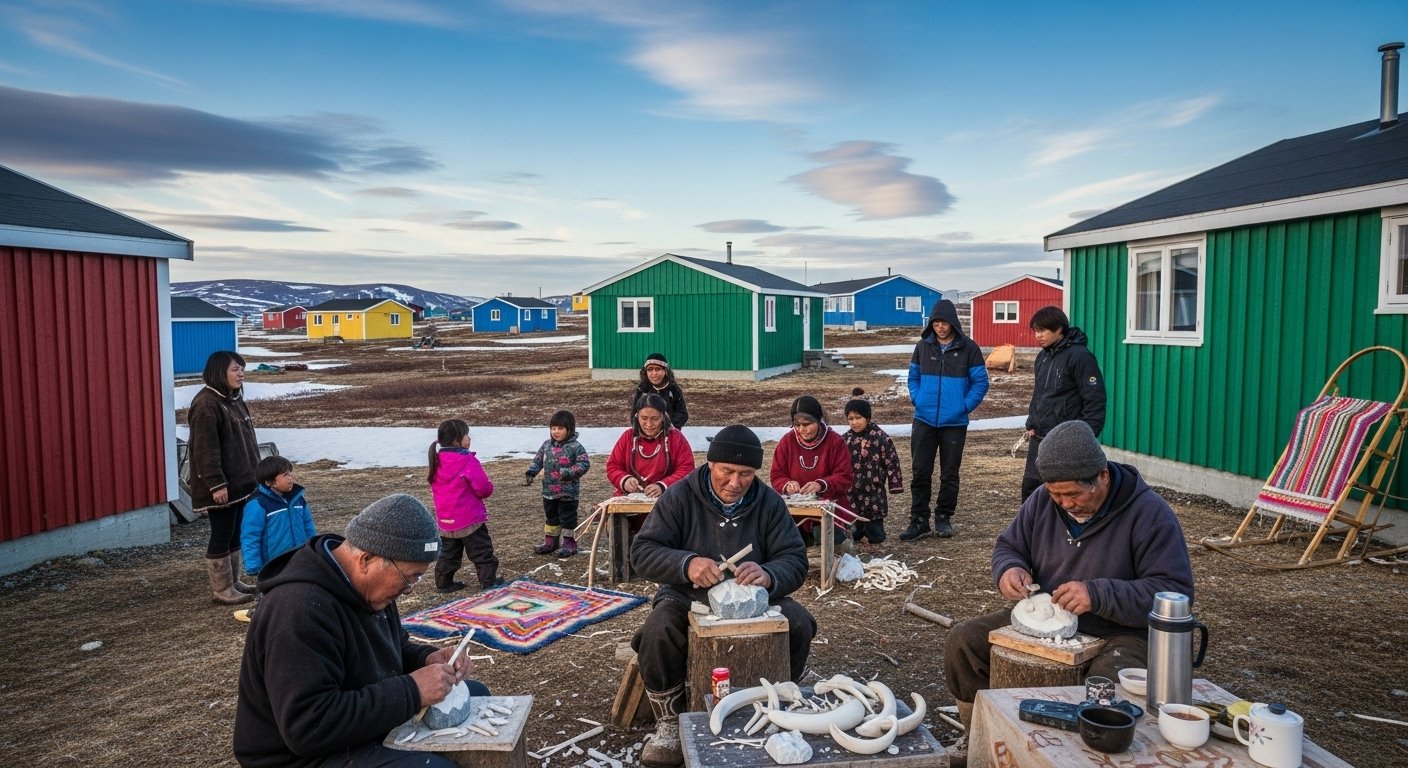
Taloyoak is especially renowned for its traditional Inuit craftsmanship, particularly carving and handmade objects that reflect centuries of knowledge.
Craftsmanship here is not a hobby—it is a continuation of survival skills, transformed into artistic expression. The same careful hands that once shaped tools for hunting and travel now create carvings that tell stories of animals, spirits, and daily life.
Carving as Cultural Language
Taloyoak carvings are often admired for their strength and clarity. They may depict:
- Arctic animals in motion
- family scenes
- hunting life
- spiritual figures
- relationships between humans and nature
Each piece is shaped slowly, thoughtfully, and with deep respect for the material. Stone is not rushed. Meaning is not forced.
As someone who loves slow cooking and handmade traditions, I see a familiar rhythm here: patience as a form of respect.
Artists as Teachers and Storytellers
In Taloyoak, artists are also educators. Through their work, they pass on:
- traditional values
- stories of the land
- lessons about balance and responsibility
- cultural identity
Young people often learn by watching elders work—absorbing not just technique, but attitude. This kind of learning is quiet, powerful, and enduring.
As a former teacher, I find this deeply inspiring. It reminds us that education does not always require formal classrooms—it requires presence, patience, and trust.
Strong Community-Based Cultural Life
Taloyoak’s strength lies in its people. This is a community where relationships come first, and where culture is lived collectively rather than individually.
Community life includes:
- shared meals
- collective celebrations
- elders guiding decision-making
- families supporting one another
There is a strong sense of responsibility—not just to oneself, but to neighbors, ancestors, and future generations.
For travelers, this creates an atmosphere that feels grounded and sincere. You are not entering a tourist attraction; you are entering someone’s home.
Daily Life in Taloyoak
Life in Taloyoak follows the seasons and the needs of the community.
You may notice:
- artists working steadily over long periods
- families planning together for seasonal activities
- elders sharing stories with children
- careful preparation for travel on the land
Time here moves differently. Efficiency is less important than correctness. Decisions are made with foresight rather than urgency.
For visitors, this slower pace can be a gift—an invitation to listen rather than rush.
Food, Sharing, and Care
Food in Taloyoak is closely tied to tradition and sharing. Meals are not just nourishment; they are expressions of care and belonging.
Sharing food reinforces community bonds and ensures that everyone is looked after. Generosity here is quiet and practical, not performative.
As a cook and homemaker, I deeply admire this approach. It reflects an understanding that food carries responsibility—not just flavor.
Living Close to Nature
Nature is not something Taloyoak residents “visit.” It is part of everyday life.
People here read:
- weather patterns
- ice conditions
- animal behavior
- seasonal signals
This knowledge is essential for safety and survival, but it also fosters humility. Nature is respected as a powerful partner, not a resource to dominate.
For travelers, spending time in Taloyoak encourages a different mindset—one of attentiveness and restraint.
Seasons Near the Arctic Circle
Taloyoak experiences dramatic seasonal contrasts that shape daily life and cultural practices.
Winter
Winter is long and introspective. Darkness encourages storytelling, craftsmanship, and family time. Creativity flourishes indoors, and community bonds deepen.
Spring
Spring is a time of transition. Conditions change quickly, and careful judgment is essential. The return of light brings renewed energy and anticipation.
Summer
Summer brings extended daylight and opportunities for land-based activities. It is a time of movement, teaching, and connection with the environment.
Autumn
Autumn is about preparation and gratitude—getting ready for winter and acknowledging what the land has provided.
Each season reinforces resilience and mutual support.
Respectful Travel to Taloyoak
Taloyoak is welcoming, but respectful travel is essential.
Travelers should:
- ask permission before photographing people or artwork
- support local artists and businesses
- be patient with schedules and conditions
- listen more than speak
Approaching with humility opens doors to meaningful experiences that no guidebook can provide.
Why Taloyoak Matters
Taloyoak matters because it represents:
- the endurance of Inuit craftsmanship
- the strength of community-based cultural life
- the importance of elders and shared knowledge
- a way of living rooted in balance and respect
In a world increasingly focused on speed and consumption, Taloyoak offers a powerful reminder that care, continuity, and creativity are equally valuable measures of progress.
A Personal Reflection
As Octavia, Taloyoak speaks to everything I value—family, handmade traditions, learning through doing, and living thoughtfully within one’s environment.
It reminds me of kitchens where recipes were taught by feel rather than measurement, and of lessons passed down through example rather than instruction.
Taloyoak shows us that culture survives not by being displayed, but by being lived together.
🧡 Final Thoughts
Taloyoak is more than a northern community near the Arctic Circle. It is a place where traditional Inuit craftsmanship thrives, where community shapes daily life, and where culture is carried forward with quiet confidence.
For travelers seeking authenticity, creativity, and a deeper understanding of Inuit life, Taloyoak offers an experience that is gentle, grounding, and unforgettable.
Come with respect. Come with patience. And allow Taloyoak to teach you what it means to live well—together, thoughtfully, and with heart.