
Introduction
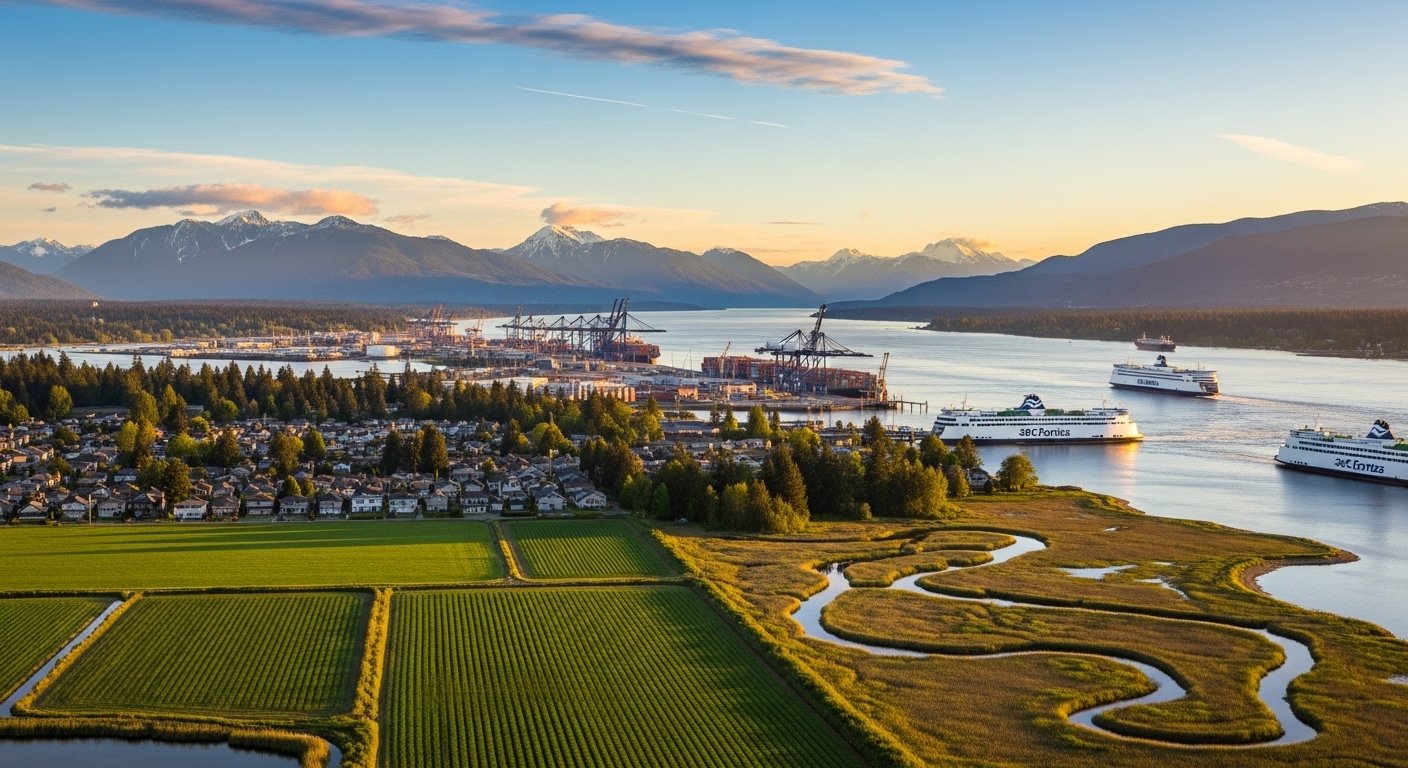
Delta is a place where land meets sea in the most peaceful and expansive way. Located in Metro Vancouver, this unique municipality stretches across fertile farmland, coastal wetlands, and quiet residential communities. Unlike busier urban centers nearby, Delta feels open, airy, and wonderfully unhurried.
What makes Delta special is its geography. Surrounded by the Fraser River to the north, the Strait of Georgia to the west, and the U.S. border to the south, Delta offers sweeping views, wide skies, and a deep connection to water. It is divided into three main communities—Ladner, Tsawwassen, and North Delta—each with its own personality, yet all share a strong sense of community and closeness to nature.
Delta’s agricultural roots run deep. Rich soil makes it one of British Columbia’s most productive farming regions. Fields of berries, vegetables, and flowers stretch across the landscape, and farm markets provide fresh, seasonal flavors that travelers immediately notice. There is something grounding about seeing farmland thrive so close to a major metropolitan area.
At the same time, Delta is known for its natural ecosystems. The region is internationally recognized for birdwatching and wildlife viewing, especially along its coastal marshes and estuaries. Migratory birds gather here in impressive numbers, drawing nature lovers from around the world.
Delta also offers beaches—long, windswept stretches of shoreline where sunsets glow over the water and the Gulf Islands appear faintly in the distance. These beaches feel quieter and less commercial than many coastal destinations, giving visitors space to relax and reflect.
For travelers, Delta offers balance. You can walk along peaceful oceanfront trails in the morning, explore a charming historic village in the afternoon, and enjoy fresh local cuisine in the evening. Life here moves gently, shaped by tides, seasons, and community traditions.
Delta is ideal for visitors seeking calm beauty, open landscapes, and authentic local experiences. It may not shout for attention, but it quietly leaves a lasting impression.
Best Places to Visit in Delta
1. Centennial Beach
Centennial Beach, located in Boundary Bay Regional Park, is one of Delta’s most cherished coastal destinations. This wide, sandy shoreline stretches along calm, shallow waters, making it especially welcoming for families and relaxed beachgoers.
The beach is famous for its spectacular sunsets. On clear evenings, the sky glows in shades of gold and pink while distant mountains frame the horizon. Walking along the shoreline feels expansive and peaceful, with seabirds often dotting the sand and sky.
Cycling and walking paths weave through the surrounding parkland, and grassy picnic areas make it easy to spend a full afternoon outdoors. Birdwatchers are particularly drawn to this area, as Boundary Bay is part of an important migratory bird route.
Centennial Beach perfectly captures Delta’s coastal serenity—unpretentious, natural, and refreshingly open.
2. Historic Ladner Village
Ladner Village offers a charming step back in time. Located along the Fraser River, this historic fishing and farming community features quaint streets lined with local shops, cafés, and heritage buildings.
The Ladner Village Market, held seasonally, brings the waterfront to life with artisan vendors, fresh produce, and community spirit. Even on quieter days, strolling along the marina and boardwalk offers scenic river views and a glimpse into Delta’s maritime heritage.
The village atmosphere feels intimate and welcoming. Independent boutiques and cozy restaurants create a relaxed, small-town charm rarely found so close to Vancouver.
Historic Ladner Village embodies Delta’s heart—community-centered, rooted in history, and rich in character.
3. George C. Reifel Migratory Bird Sanctuary
Nature lovers will find the George C. Reifel Migratory Bird Sanctuary unforgettable. Located on Westham Island, this protected area provides habitat for thousands of birds throughout the year.
Walking trails loop through wetlands, marshes, and viewing platforms where visitors can observe snow geese, sandhill cranes, ducks, and bald eagles. The sanctuary offers a rare opportunity to see wildlife up close in a peaceful, well-managed environment.
The quiet here feels restorative. Wind moves gently through reeds, and the sounds of birds replace city noise. It’s an experience that encourages patience and appreciation for the natural world.
This sanctuary highlights Delta’s ecological importance and its commitment to environmental preservation.
4. Tsawwassen Mills & Southlands
Tsawwassen Mills provides a modern contrast to Delta’s rural landscapes. This large shopping and entertainment complex offers retail stores, dining options, and family-friendly attractions.
Nearby, Southlands is a thoughtfully planned community emphasizing agriculture, local food, and sustainable living. Walking trails, community gardens, and open fields showcase Delta’s forward-thinking approach to development.
Together, these areas reflect Delta’s evolving identity—honoring farmland traditions while embracing thoughtful growth.
Conclusion
Delta is a destination defined by space—space to breathe, to walk, to reflect, and to reconnect. In a region often associated with rapid growth and urban energy, Delta offers something gentler and more grounded.
Its landscapes tell the story. Fields stretch wide beneath open skies. Shorelines curve quietly along calm waters. Marshes hum with birdlife. The environment shapes daily life here, creating a rhythm guided by seasons and tides.
Travelers often find that Delta slows them down in the best way. Without towering skyscrapers or crowded attractions, attention naturally shifts to simple pleasures: the sound of waves at Centennial Beach, the warmth of fresh bread in Ladner Village, or the sight of cranes rising from wetlands at dawn.
Community spirit also defines Delta. Markets, small businesses, and neighborhood gatherings reveal a place where people value connection. Visitors sense this warmth immediately. It feels personal rather than commercial.
Delta’s agricultural foundation remains strong. Farm stands and local produce remind travelers of the importance of land stewardship and sustainability. Even new developments reflect careful planning to maintain balance between growth and preservation.
The coastline offers moments of quiet beauty rarely matched elsewhere in Metro Vancouver. Watching the sun set over Boundary Bay, with the Gulf Islands silhouetted in the distance, leaves a lasting impression. These are not dramatic cliffs or roaring surf—rather, they are calm, expansive views that invite reflection.
Seasonal changes enrich the experience. Spring brings blossoms and migratory birds. Summer offers warm beach days and lively markets. Autumn paints fields golden and welcomes harvest festivals. Winter reveals misty shorelines and peaceful solitude.
Delta appeals especially to travelers who value authenticity and calm exploration. It is not about ticking off famous landmarks. It is about feeling connected—to nature, to community, and to a sense of place that remains grounded despite modern pressures.
In many ways, Delta represents a quieter side of coastal British Columbia. It proves that beauty does not always need dramatic peaks or bustling downtowns. Sometimes it lies in flat farmland stretching toward the horizon, in soft waves touching sandy shores, and in communities that grow thoughtfully rather than quickly.
When you leave Delta, you may not carry flashy souvenirs or dramatic stories. Instead, you carry a sense of calm, open skies, and gentle coastal air. You remember the sound of birds overhead and the warmth of local smiles.
Delta doesn’t demand attention—it invites appreciation. And for travelers willing to slow down and notice its details, it offers something truly meaningful: a reminder that some of the most beautiful places are the ones that let you breathe a little deeper. 🌊🌾✨