
Introduction
Edmonton, the capital city of Alberta, is often described as Canada’s “Festival City,” but that title only begins to capture its character. Situated along the North Saskatchewan River, Edmonton combines cultural vibrancy, expansive green spaces, and northern charm in a way few cities can. It is a place where urban creativity meets vast natural landscapes, and where community spirit defines daily life.
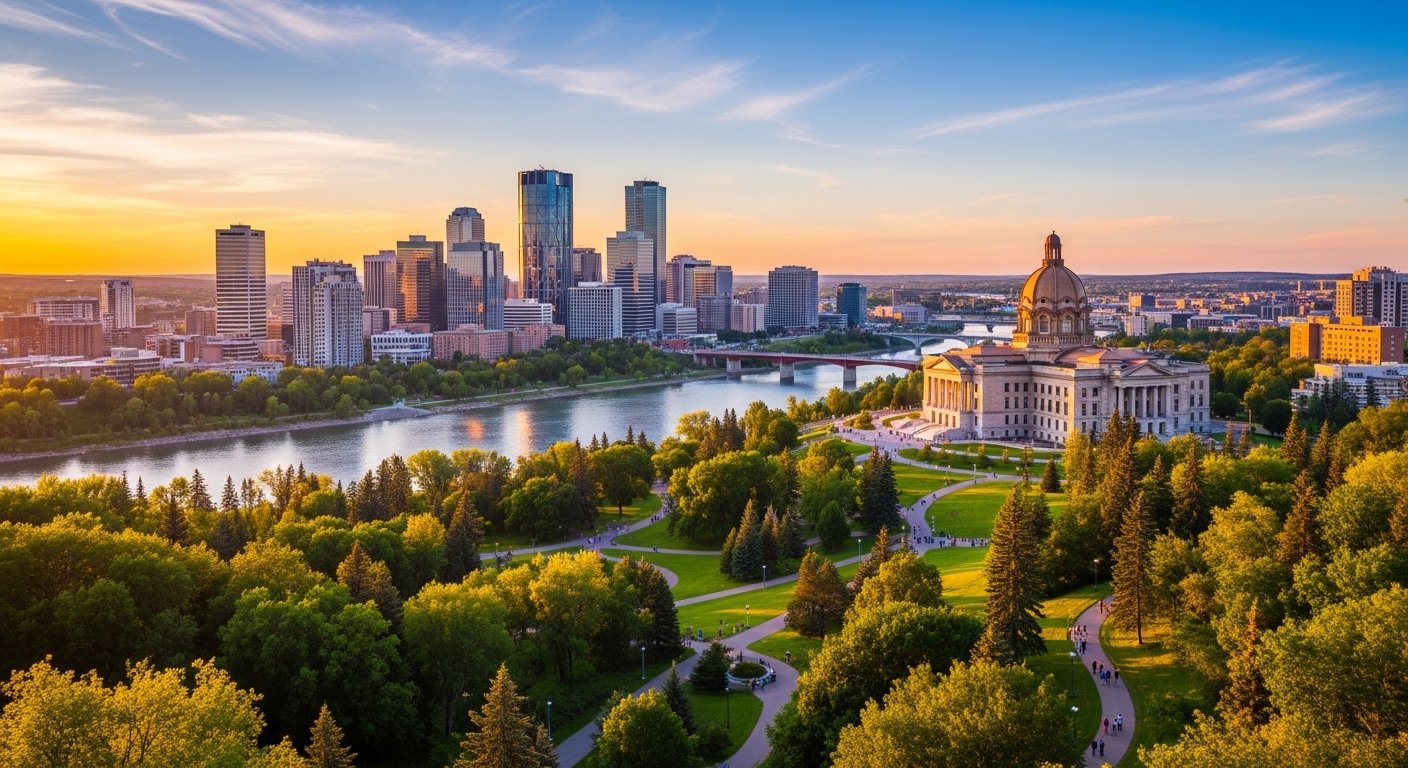
Unlike cities framed by mountains or oceans, Edmonton’s beauty lies in its river valley — the largest urban parkland system in North America. This network of trails, forests, and open spaces runs directly through the heart of the city, creating an extraordinary balance between nature and city living. Whether you are cycling along the river, kayaking in summer, or snowshoeing in winter, Edmonton invites you outdoors.
Historically, Edmonton grew as a fur trading post and gateway to Canada’s North. Over time, it evolved into a major center for government, education, energy, and arts. Today, it is home to a diverse population and a thriving cultural scene. The city embraces its northern identity with pride, offering long summer evenings filled with festivals and cozy winter experiences under sparkling snow.
One of Edmonton’s defining features is its sense of space. Wide streets, open skies, and sprawling parks create a feeling of freedom. The city never feels cramped, even at its busiest. This openness pairs beautifully with a strong arts and culinary scene, making it a surprisingly dynamic urban destination.
Edmonton is also home to one of the world’s largest shopping and entertainment complexes, West Edmonton Mall, but the city extends far beyond retail. It offers museums, galleries, historic districts, and a growing culinary landscape that celebrates both Alberta ingredients and global flavors.
For travelers, Edmonton provides a refreshing alternative to more conventional tourist cities. It’s authentic, creative, and grounded. It welcomes visitors not with flashy glamour, but with warmth, festivals, and riverside sunsets.
Whether you’re exploring its river valley, attending a summer festival, or diving into its cultural institutions, Edmonton promises a travel experience filled with energy and heart.
Best Places to Visit in Edmonton
1. West Edmonton Mall
West Edmonton Mall is one of the city’s most iconic attractions and one of the largest malls in North America. More than just a shopping center, it is an entertainment destination in its own right.
Inside, you’ll find Galaxyland, an indoor amusement park complete with roller coasters and family rides. The World Waterpark features wave pools and water slides beneath a massive glass ceiling. There is also an indoor ice rink, mini-golf, themed attractions, restaurants, and even a full-scale replica pirate ship.
Visitors can easily spend an entire day here exploring shops, dining options, and entertainment experiences. The mall’s scale is impressive, and its variety ensures something for all ages.
West Edmonton Mall represents Edmonton’s bold and ambitious spirit — a place where entertainment and retail merge into an unforgettable indoor adventure.
2. Elk Island National Park
Just a short drive east of Edmonton lies Elk Island National Park, a stunning natural retreat known for its wildlife and tranquil landscapes.
The park is home to free-roaming bison, elk, deer, and countless bird species. Scenic driving routes and hiking trails allow visitors to explore forests, wetlands, and lakes. Astotin Lake is a popular spot for canoeing, picnicking, and stargazing.
Elk Island is also a designated dark sky preserve, making it ideal for observing the northern lights during clear winter nights.
For travelers seeking nature beyond the city, Elk Island offers an immersive experience in Alberta’s prairie and boreal landscapes.
3. Fort Edmonton Park
Fort Edmonton Park brings history to life through immersive exhibits and restored buildings representing different eras of Edmonton’s development.
Visitors can walk through recreated streets from the 1880s, 1905, 1920s, and 1920s–1940s periods. Costumed interpreters, vintage streetcars, and historic architecture create a vivid sense of stepping back in time.
The park offers insight into Edmonton’s early fur trade roots and its growth into a modern city. Interactive experiences and live demonstrations make it both educational and engaging.
Fort Edmonton Park celebrates the city’s past while making it accessible and entertaining for today’s visitors.
4. North Saskatchewan River Valley
The North Saskatchewan River Valley is Edmonton’s natural crown jewel. Stretching over 160 kilometers of trails and green spaces, it is larger than New York’s Central Park.
Cyclists, joggers, and walkers enjoy the interconnected pathway system year-round. In summer, the valley is lush and vibrant. In autumn, golden leaves line the trails. In winter, snow blankets the landscape, creating serene beauty.
Kayaking, cross-country skiing, and picnicking are popular activities. The river valley connects major attractions, making it both scenic and functional.
This urban parkland defines Edmonton’s identity and offers a peaceful escape within the city.
Conclusion
Edmonton is a city that surprises visitors in the best possible way.
At first glance, it may seem understated compared to larger Canadian cities. But once you begin exploring, you discover a destination filled with creativity, resilience, and northern warmth.
Its identity as Canada’s Festival City is well earned. Throughout the year, Edmonton hosts dozens of festivals celebrating music, theatre, food, culture, and winter itself. The long summer days create an electric atmosphere, with patios full and streets alive with performances.
Yet even beyond festivals, the city offers depth. Its river valley provides constant access to nature, shaping both recreation and daily life. Few capital cities in the world offer such an expansive natural system within their borders.
Edmonton also carries a strong sense of community. The arts scene thrives with independent galleries, live theatre, and public art installations. Culinary offerings range from farm-to-table dining to international street food, reflecting the city’s growing diversity.
Winter deserves special mention. Rather than retreating indoors, Edmonton embraces the season. Ice sculptures, outdoor skating, and snowy river valley trails transform the cold months into something magical. The crisp northern air and possibility of aurora sightings add to the charm.
Accessibility is another advantage. The city is well organized and easy to navigate. Attractions are spread out but connected by thoughtful infrastructure.
For travelers, Edmonton offers flexibility. You can spend a day at West Edmonton Mall enjoying entertainment and dining. The next day, you can hike among bison in Elk Island National Park. You can explore living history at Fort Edmonton Park or enjoy quiet reflection along the river valley.
The city’s northern latitude shapes its personality. Summer sunsets linger late into the evening. Winter nights sparkle with frost and stars. Seasonal extremes create memorable experiences that feel distinctly Canadian.
Edmonton does not rely on dramatic landscapes or flashy branding. Instead, it invites you to engage — to attend a festival, to walk a forested trail, to share a meal, to learn its history.
It is a city that rewards curiosity.
Standing in the river valley at sunset, watching golden light reflect off downtown buildings, you feel Edmonton’s balance — urban and natural, historic and modern, energetic and calm.
It may not shout for attention on the global stage, but it quietly earns admiration through authenticity and heart.
Edmonton represents the spirit of Canada’s North: resilient, welcoming, creative, and deeply connected to land and community.
When you leave, you carry more than memories of attractions. You carry the feeling of open skies, festival laughter, forest trails, and warm hospitality.
And that feeling — grounded yet vibrant — is what makes Edmonton truly special. 🌲🎉✨
Top of Form