
Introduction
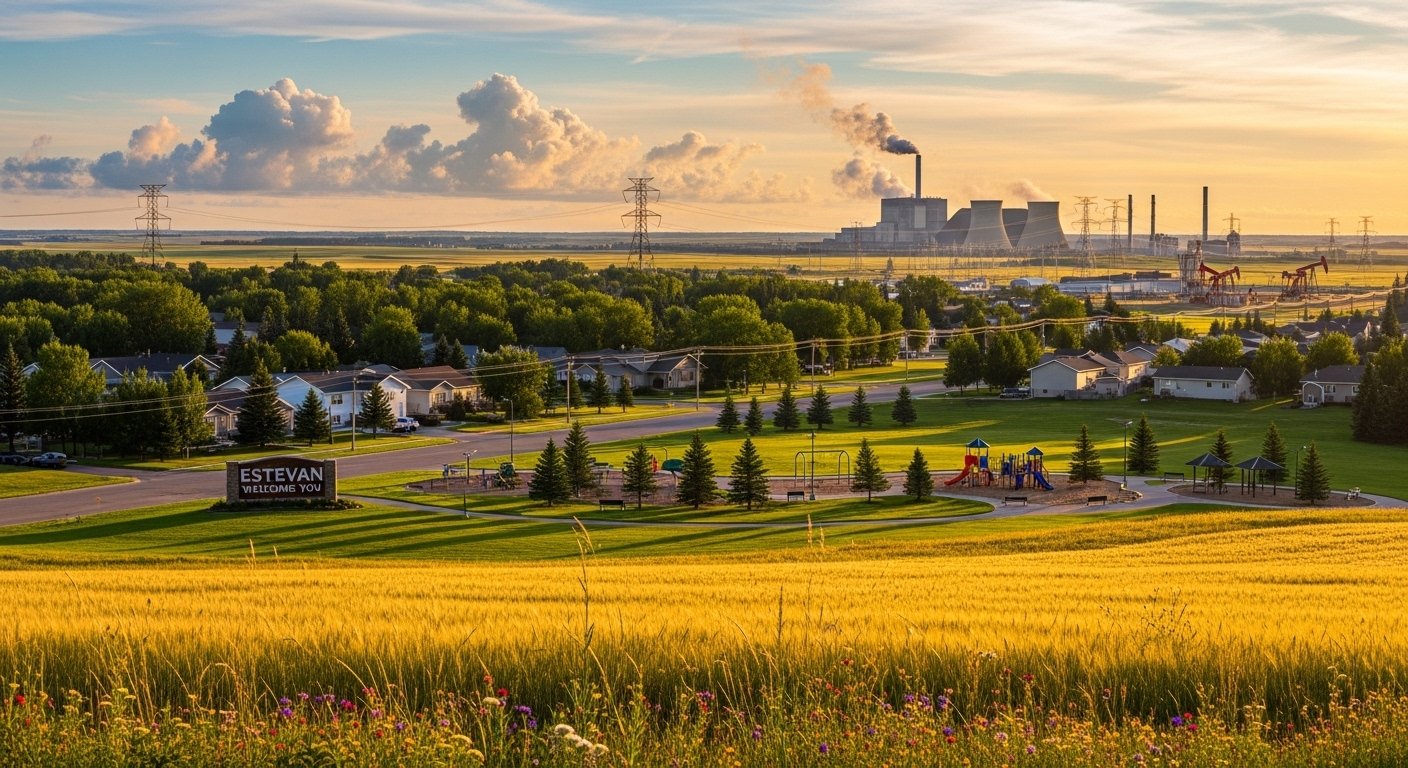
Located in the southeastern corner of Saskatchewan near the borders of North Dakota and Manitoba, Estevan is widely known as the “Energy City.” Built on a foundation of coal mining, oil production, and power generation, Estevan combines industrial significance with prairie charm, outdoor recreation, and community warmth.
Unlike many prairie towns that grew primarily through agriculture, Estevan’s identity is closely tied to natural resources. The region’s coal reserves and oil fields have played a crucial role in Saskatchewan’s economy for decades. Yet beyond its industrial reputation, Estevan offers visitors scenic landscapes, cultural attractions, and a welcoming small-city atmosphere.
The Souris River flows gently through the area, adding greenery and natural beauty to the surrounding plains. The region’s rolling prairie terrain provides wide-open views and expansive skies that are especially striking at sunrise and sunset. In summer, the fields shimmer under golden light, while winter blankets the land in quiet white snow.
Estevan enjoys one of the sunniest climates in Canada, making it attractive for outdoor activities year-round. Warm summers encourage camping, golfing, and water recreation. Crisp autumns showcase harvest colors. Winters bring opportunities for skating and snow-based activities, and spring signals renewal across the fields.
The city also has a resilient spirit shaped by its working-class roots. Estevan’s history includes labor movements and industrial milestones that influenced Saskatchewan’s development. Today, the community continues to grow while maintaining strong ties to its heritage.
Visitors to Estevan often discover a destination that feels authentic and grounded. There is pride here — pride in hard work, in community cooperation, and in contributing to the province’s energy needs. Yet there is also balance, seen in parks, cultural centers, and recreational spaces.
Whether you are exploring its mining history, relaxing by the river, or enjoying a local event, Estevan offers a travel experience rooted in prairie resilience and hospitality. It is a city that tells the story of Saskatchewan’s resource economy while welcoming visitors with genuine warmth.
Best Places to Visit in Estevan
1. Souris Valley Museum
To understand Estevan’s heritage, begin at the Souris Valley Museum.
This open-air and indoor museum complex preserves the history of southeastern Saskatchewan. Exhibits highlight coal mining, early settlement, transportation, and local industry. Historic buildings, including a pioneer home and church, recreate life from earlier eras.
Visitors can explore mining equipment displays and learn about the region’s labor history, including significant events that shaped worker rights in Saskatchewan. The museum offers a comprehensive look at how natural resources influenced the city’s development.
For anyone interested in industrial heritage and prairie life, the Souris Valley Museum provides context and insight into Estevan’s evolution.
2. Estevan Woodlawn Regional Park
Nature lovers will enjoy Estevan Woodlawn Regional Park, located along the Souris River.
This expansive park offers camping, walking trails, picnic areas, and scenic river views. In summer, it becomes a lively destination for families, golfers, and outdoor enthusiasts. The park also features a golf course and recreational facilities.
The peaceful river setting contrasts beautifully with Estevan’s industrial identity, showing the balance between work and relaxation that defines the community.
Whether you’re enjoying a riverside walk or an afternoon picnic, Woodlawn Regional Park offers a refreshing escape into prairie nature.
3. Boundary Dam Power Station & Shand Power Station
Estevan’s nickname, “Energy City,” is closely linked to facilities like the Boundary Dam Power Station.
As one of Saskatchewan’s major coal-fired power plants, Boundary Dam gained international recognition for implementing carbon capture and storage technology. Nearby, Shand Power Station further supports the province’s energy grid.
While access to operational facilities may be limited, learning about these stations highlights Estevan’s global importance in energy production and innovation.
These sites symbolize the city’s economic backbone and its role in powering communities across Saskatchewan.
4. TS&M Woodlawn Golf Club
Golf enthusiasts can visit TS&M Woodlawn Golf Club.
Set within Woodlawn Regional Park, this scenic 18-hole course offers well-maintained fairways and beautiful river valley views. The course attracts both local players and visitors seeking a relaxing round in a peaceful prairie setting.
The clubhouse provides dining and event facilities, making it a social hub during summer months.
The golf club represents Estevan’s recreational side — a place where residents unwind and visitors experience the city’s welcoming atmosphere.
Conclusion
Estevan stands as a testament to the power of perseverance and resourcefulness.
Known as Saskatchewan’s Energy City, it has fueled homes, businesses, and industries across the province for decades. Coal mines and power stations form a central chapter in its story, but they do not define the city entirely. Beneath its industrial surface lies a community built on cooperation, resilience, and pride.
At the Souris Valley Museum, visitors trace the journey from pioneer days to modern industry. The exhibits reveal how settlers adapted to prairie conditions and how energy resources transformed the region’s economy.
Woodlawn Regional Park, with its tree-lined riverbanks and open green spaces, shows a different side of Estevan. It reflects the city’s appreciation for nature and recreation. Here, families gather, campers relax, and golfers enjoy summer sunshine under expansive skies.
The presence of Boundary Dam Power Station symbolizes innovation. Estevan is not only about extracting resources — it is also about evolving technology and environmental responsibility. Carbon capture initiatives demonstrate the city’s participation in global energy conversations.
Yet perhaps the most memorable aspect of Estevan is its community spirit.
Residents take pride in their city’s contribution to Saskatchewan’s prosperity. There is a sense of shared purpose rooted in hard work and mutual support. Conversations feel genuine. Hospitality is sincere.
Seasonally, Estevan transforms with the prairie climate. Summers bring warmth and outdoor festivals. Autumn highlights harvest activity and golden landscapes. Winters are crisp and bright, while spring renews the fields.
Travelers who visit Estevan gain perspective on an essential part of Canada’s resource economy. They witness how industry and community coexist. They see how energy production supports everyday life across the province.
But they also discover something more personal.
They discover river walks at sunset.
They discover museum exhibits that tell powerful local stories.
They discover friendly smiles in local shops and restaurants.
Estevan may not have towering skylines or dramatic mountains. Instead, it offers authenticity.
It offers space.
It offers pride.
It offers a reminder that communities built on hard work often possess the strongest foundations.
Standing beneath a vast prairie sky, watching sunlight stretch across open fields, you sense the quiet strength that defines this region.
Estevan’s story is one of transformation — from frontier settlement to industrial hub to modern energy innovator.
It is a story of resilience.
A story of adaptation.
A story of powering not just homes, but opportunity.
For travelers seeking to understand Saskatchewan beyond its major cities, Estevan provides valuable insight. It represents the working heart of the province.
And long after your visit, you may remember the openness of its landscape and the warmth of its people.
Estevan does not seek attention.
It simply continues doing what it has always done — powering forward.
And in that steady determination lies its true character.
Energy City is more than a nickname.
It is a reflection of spirit.
A spirit that welcomes visitors with strength, sincerity, and prairie pride. 🌾