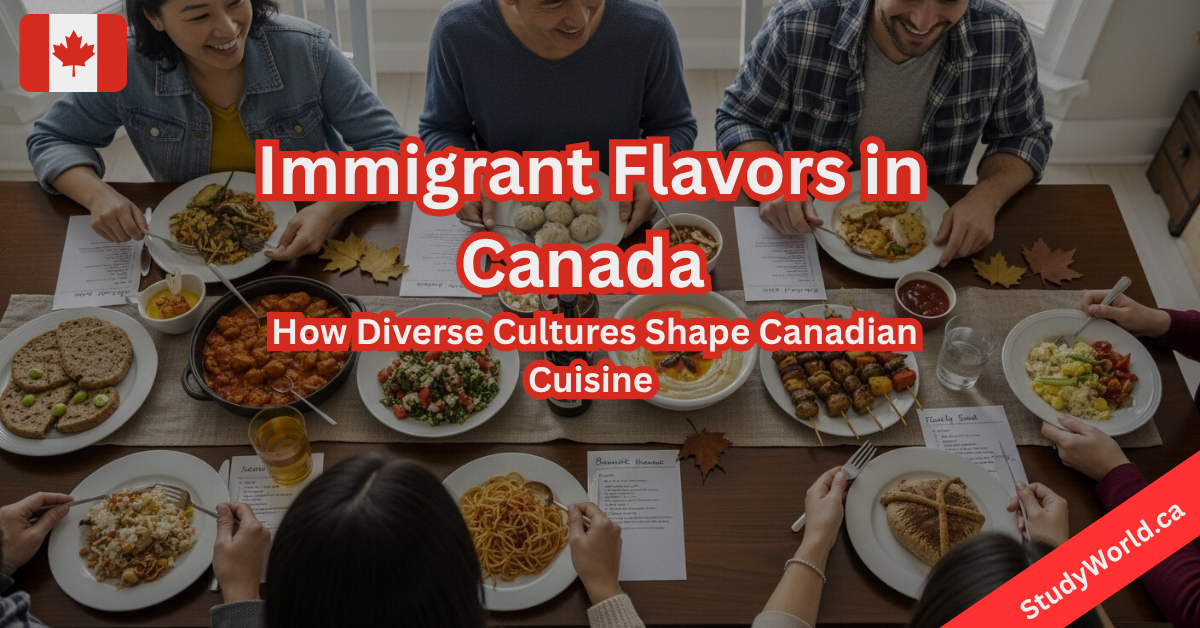

Immigrant Flavors in Canada – How Diverse Cultures Shape Canadian Cuisine
Hello dear readers,
If there’s one thing that unites people across Canada, it’s our love for good food. From cozy home kitchens to bustling city markets, food brings us together — across generations, backgrounds, and beliefs. It’s how we connect, share stories, and celebrate life.
Having lived in Canada for many years, I’ve always been amazed by how our dining tables reflect the diversity of our nation. Every neighborhood, every province, and every family kitchen tells a story — not just of ingredients and recipes, but of journeys, resilience, and belonging.
Today, I want to celebrate the immigrant flavors of Canada — the dishes, traditions, and influences that make Canadian cuisine such a rich and beautiful mosaic.
The Taste of a Nation Built by Many Hands
When people think of “Canadian food,” they might picture maple syrup, poutine, butter tarts, or Nanaimo bars. These are delicious, of course, but they’re only a small slice of the full picture. Canada’s cuisine is a living reflection of the people who’ve come here from every corner of the world — bringing their spices, cooking traditions, and memories of home.
Over time, these foods have mingled with Indigenous, French, and British influences to create something uniquely Canadian — a cuisine that’s open-hearted, adaptable, and ever-evolving.
In my own home, our table often looks like a world map. There might be Indian butter chicken one night, Italian lasagna the next, and a comforting bowl of Vietnamese pho on a cold day. And that, I think, is the magic of living in Canada — every meal can feel like a small celebration of global connection.
Indigenous Roots – The Original Canadian Cuisine
Before we explore the immigrant flavors that shaped modern Canada, it’s essential to recognize the foundation laid by Indigenous communities, whose relationship with the land and food is deeply rooted in respect and sustainability.
Ingredients like bison, wild salmon, corn, berries, and maple syrup have long been part of Indigenous diets and are central to traditional dishes such as bannock, smoked fish, and wild rice stews. These foods reflect a deep understanding of the land — something all Canadians continue to benefit from today.
Many immigrant chefs have also learned from Indigenous traditions, incorporating local ingredients and sustainability practices into their own cooking. It’s a beautiful exchange — one that continues to define Canadian food culture.
French and British Beginnings
Canada’s earliest European settlers — mainly from France and Britain — brought their own food traditions, shaping the foundation of what we now think of as “classic Canadian” cuisine.
In Quebec, French settlers introduced dishes like tourtière (a spiced meat pie), pea soup, and cretons (a pork spread). Their influence also gave us rich pastries, cheese-making traditions, and that distinct love of buttery comfort food.
Meanwhile, British settlers brought their own staples — from fish and chips to roast dinners and tea-time rituals. In Atlantic Canada, the British and Irish influence is still felt in hearty seafood chowders and brown bread.
These early culinary influences provided the canvas upon which later immigrant communities painted their own vibrant flavors.
Waves of Immigration – A Feast of Cultures
1. Italian and Greek Influence
Post-World War II, Canada welcomed large numbers of immigrants from Italy and Greece, who brought with them a deep passion for fresh, simple ingredients.
- Italian Canadians introduced us to pasta, pizza, espresso, and gelato, but they also reshaped local eating habits — teaching us the joy of long family meals and the beauty of homegrown produce.
- Greek communities gave us souvlaki, tzatziki, spanakopita, and baklava, and their love for olive oil, lemon, and herbs inspired healthier, Mediterranean-style dining across the country.
Today, you’ll find Italian and Greek restaurants in nearly every Canadian city — not as foreign food, but as beloved neighborhood staples.
2. Chinese and Southeast Asian Flavors
Chinese immigrants began arriving in the 19th century, particularly during the construction of the Canadian Pacific Railway. Despite facing hardship and discrimination, their culinary legacy blossomed.
- Dishes like chow mein, sweet and sour pork, and wonton soup became part of everyday Canadian dining.
- In Vancouver, Toronto, and Calgary, you’ll find dim sum brunches that rival those in Hong Kong.
More recently, immigrants from Vietnam, Thailand, and the Philippines have added new layers to Canada’s flavor story.
- Vietnamese pho and banh mi, Thai green curries, and Filipino adobo and halo-halo desserts are now beloved by Canadians of all backgrounds.
- These dishes reflect not just flavor, but also warmth — the comfort of home for many immigrant families.
3. South Asian Spices and Comfort
Indian, Pakistani, Bangladeshi, and Sri Lankan communities have deeply influenced Canadian food culture. From major cities to small towns, the aroma of spices like cardamom, cumin, turmeric, and coriander fills the air.
- Indian restaurants have made butter chicken, naan, and samosas household names.
- Street foods like chaat, dosa, and biryani have become favorites for adventurous foodies.
Beyond the restaurants, South Asian cooking has also influenced Canadian home kitchens — introducing ingredients like lentils, chickpeas, and basmati rice into mainstream diets.
What I especially admire is the way South Asian families in Canada keep their traditions alive — passing down recipes from mothers to daughters, celebrating festivals with elaborate meals, and inviting neighbors to share in the joy.
4. Middle Eastern and North African Inspirations
In recent decades, immigrants from Lebanon, Syria, Egypt, and Morocco have brought a new wave of delicious traditions.
- Falafel, hummus, shawarma, and kebabs are now part of Canadian street food culture.
- Moroccan tagines and Egyptian koshari showcase complex spices that have found a home in Canadian kitchens.
Cities like Ottawa and Montreal now boast vibrant Middle Eastern bakeries where you can find baklava dripping with honey, ma’amoul cookies, and fresh pita bread baked daily.
5. Caribbean and African Soul
From Jamaica to Trinidad, and from Nigeria to Ethiopia, Canada’s Caribbean and African communities have added rich and soulful flavors to our food landscape.
- Jamaican jerk chicken, patties, and plantains bring a taste of sunshine to even the coldest Canadian days.
- Ethiopian injera and spiced lentil stews have introduced Canadians to a beautiful, communal way of eating — sharing from a single platter.
These foods don’t just nourish the body; they tell stories of resilience, migration, and joy.
Canada’s New Fusion Identity
What’s truly remarkable about Canadian cuisine is how it continues to evolve. New generations of Canadians — many of mixed heritage — are creating innovative fusion dishes that reflect their blended identities.
You’ll find:
- Sushi burritos in Toronto
- Butter chicken poutine in Vancouver
- Korean BBQ tacos in Calgary
- Maple miso salmon in Montreal
These aren’t just culinary experiments — they’re expressions of who we are as a nation. A country where cultures don’t just coexist; they collaborate.
Food as a Bridge Between Communities
As someone who loves both cooking and people, I’ve always believed that food is our most universal language. You don’t need to speak the same words to share a meal — the warmth of hospitality speaks for itself.
In Canada, food has become a bridge — connecting newcomers and locals, helping families hold onto their roots while embracing their new home.
I’ve met so many inspiring women who arrived here with a suitcase and a few recipes from their mothers, only to build thriving restaurants, bakeries, and catering businesses. Their food isn’t just delicious — it’s a love letter to both their homeland and Canada.
At community festivals or multicultural potlucks, I often find myself smiling as I move from table to table — one offering pierogies, another samosas, another tamales or sushi rolls. It’s like tasting the world without ever leaving home.
The Future of Canadian Cuisine
Looking ahead, I see Canadian cuisine continuing to grow in exciting, inclusive ways. Young chefs are honoring their cultural backgrounds while championing local ingredients and sustainability.
There’s a growing movement toward farm-to-table dining, incorporating Indigenous ingredients like wild rice and bannock alongside global spices and techniques.
And in our homes, families continue to create new traditions — blending old and new recipes, passing on their heritage to the next generation, and keeping Canada’s culinary story alive.
A Personal Reflection
When I first came to Canada, I missed the comfort of familiar foods from my childhood. But over time, I found that food was also how I connected to others. I traded recipes with my neighbors, tried new dishes at community events, and discovered that Canadian kitchens are some of the most welcoming in the world.
Now, when I cook, I see Canada reflected in every dish — a little French butter, a sprinkle of Indian spice, a drizzle of maple syrup, and a big helping of warmth and generosity.
That, to me, is the true flavor of Canada.
Final Thoughts
Canada’s food culture isn’t about one national dish — it’s about thousands of stories woven together by people who brought their hearts, hopes, and flavors to this land.
Whether you’re sharing dim sum in Vancouver, shawarma in Ottawa, or samosas in Toronto, you’re tasting the beautiful diversity that defines us.
In every bite, there’s history. In every kitchen, there’s a story.
And in every shared meal, there’s the essence of what it means to be Canadian — open, kind, and always hungry for connection.
With love and gratitude,
Octavia O
Hello dear readers,
If there’s one thing that unites people across Canada, it’s our love for good food. From cozy home kitchens to bustling city markets, food brings us together — across generations, backgrounds, and beliefs. It’s how we connect, share stories, and celebrate life.
Having lived in Canada for many years, I’ve always been amazed by how our dining tables reflect the diversity of our nation. Every neighborhood, every province, and every family kitchen tells a story — not just of ingredients and recipes, but of journeys, resilience, and belonging.
Today, I want to celebrate the immigrant flavors of Canada — the dishes, traditions, and influences that make Canadian cuisine such a rich and beautiful mosaic.
The Taste of a Nation Built by Many Hands
When people think of “Canadian food,” they might picture maple syrup, poutine, butter tarts, or Nanaimo bars. These are delicious, of course, but they’re only a small slice of the full picture. Canada’s cuisine is a living reflection of the people who’ve come here from every corner of the world — bringing their spices, cooking traditions, and memories of home.
Over time, these foods have mingled with Indigenous, French, and British influences to create something uniquely Canadian — a cuisine that’s open-hearted, adaptable, and ever-evolving.
In my own home, our table often looks like a world map. There might be Indian butter chicken one night, Italian lasagna the next, and a comforting bowl of Vietnamese pho on a cold day. And that, I think, is the magic of living in Canada — every meal can feel like a small celebration of global connection.
Indigenous Roots – The Original Canadian Cuisine
Before we explore the immigrant flavors that shaped modern Canada, it’s essential to recognize the foundation laid by Indigenous communities, whose relationship with the land and food is deeply rooted in respect and sustainability.
Ingredients like bison, wild salmon, corn, berries, and maple syrup have long been part of Indigenous diets and are central to traditional dishes such as bannock, smoked fish, and wild rice stews. These foods reflect a deep understanding of the land — something all Canadians continue to benefit from today.
Many immigrant chefs have also learned from Indigenous traditions, incorporating local ingredients and sustainability practices into their own cooking. It’s a beautiful exchange — one that continues to define Canadian food culture.
French and British Beginnings
Canada’s earliest European settlers — mainly from France and Britain — brought their own food traditions, shaping the foundation of what we now think of as “classic Canadian” cuisine.
In Quebec, French settlers introduced dishes like tourtière (a spiced meat pie), pea soup, and cretons (a pork spread). Their influence also gave us rich pastries, cheese-making traditions, and that distinct love of buttery comfort food.
Meanwhile, British settlers brought their own staples — from fish and chips to roast dinners and tea-time rituals. In Atlantic Canada, the British and Irish influence is still felt in hearty seafood chowders and brown bread.
These early culinary influences provided the canvas upon which later immigrant communities painted their own vibrant flavors.
Waves of Immigration – A Feast of Cultures
1. Italian and Greek Influence
Post-World War II, Canada welcomed large numbers of immigrants from Italy and Greece, who brought with them a deep passion for fresh, simple ingredients.
- Italian Canadians introduced us to pasta, pizza, espresso, and gelato, but they also reshaped local eating habits — teaching us the joy of long family meals and the beauty of homegrown produce.
- Greek communities gave us souvlaki, tzatziki, spanakopita, and baklava, and their love for olive oil, lemon, and herbs inspired healthier, Mediterranean-style dining across the country.
Today, you’ll find Italian and Greek restaurants in nearly every Canadian city — not as foreign food, but as beloved neighborhood staples.
2. Chinese and Southeast Asian Flavors
Chinese immigrants began arriving in the 19th century, particularly during the construction of the Canadian Pacific Railway. Despite facing hardship and discrimination, their culinary legacy blossomed.
- Dishes like chow mein, sweet and sour pork, and wonton soup became part of everyday Canadian dining.
- In Vancouver, Toronto, and Calgary, you’ll find dim sum brunches that rival those in Hong Kong.
More recently, immigrants from Vietnam, Thailand, and the Philippines have added new layers to Canada’s flavor story.
- Vietnamese pho and banh mi, Thai green curries, and Filipino adobo and halo-halo desserts are now beloved by Canadians of all backgrounds.
- These dishes reflect not just flavor, but also warmth — the comfort of home for many immigrant families.
3. South Asian Spices and Comfort
Indian, Pakistani, Bangladeshi, and Sri Lankan communities have deeply influenced Canadian food culture. From major cities to small towns, the aroma of spices like cardamom, cumin, turmeric, and coriander fills the air.
- Indian restaurants have made butter chicken, naan, and samosas household names.
- Street foods like chaat, dosa, and biryani have become favorites for adventurous foodies.
Beyond the restaurants, South Asian cooking has also influenced Canadian home kitchens — introducing ingredients like lentils, chickpeas, and basmati rice into mainstream diets.
What I especially admire is the way South Asian families in Canada keep their traditions alive — passing down recipes from mothers to daughters, celebrating festivals with elaborate meals, and inviting neighbors to share in the joy.
4. Middle Eastern and North African Inspirations
In recent decades, immigrants from Lebanon, Syria, Egypt, and Morocco have brought a new wave of delicious traditions.
- Falafel, hummus, shawarma, and kebabs are now part of Canadian street food culture.
- Moroccan tagines and Egyptian koshari showcase complex spices that have found a home in Canadian kitchens.
Cities like Ottawa and Montreal now boast vibrant Middle Eastern bakeries where you can find baklava dripping with honey, ma’amoul cookies, and fresh pita bread baked daily.
5. Caribbean and African Soul
From Jamaica to Trinidad, and from Nigeria to Ethiopia, Canada’s Caribbean and African communities have added rich and soulful flavors to our food landscape.
- Jamaican jerk chicken, patties, and plantains bring a taste of sunshine to even the coldest Canadian days.
- Ethiopian injera and spiced lentil stews have introduced Canadians to a beautiful, communal way of eating — sharing from a single platter.
These foods don’t just nourish the body; they tell stories of resilience, migration, and joy.
Canada’s New Fusion Identity
What’s truly remarkable about Canadian cuisine is how it continues to evolve. New generations of Canadians — many of mixed heritage — are creating innovative fusion dishes that reflect their blended identities.
You’ll find:
- Sushi burritos in Toronto
- Butter chicken poutine in Vancouver
- Korean BBQ tacos in Calgary
- Maple miso salmon in Montreal
These aren’t just culinary experiments — they’re expressions of who we are as a nation. A country where cultures don’t just coexist; they collaborate.
Food as a Bridge Between Communities
As someone who loves both cooking and people, I’ve always believed that food is our most universal language. You don’t need to speak the same words to share a meal — the warmth of hospitality speaks for itself.
In Canada, food has become a bridge — connecting newcomers and locals, helping families hold onto their roots while embracing their new home.
I’ve met so many inspiring women who arrived here with a suitcase and a few recipes from their mothers, only to build thriving restaurants, bakeries, and catering businesses. Their food isn’t just delicious — it’s a love letter to both their homeland and Canada.
At community festivals or multicultural potlucks, I often find myself smiling as I move from table to table — one offering pierogies, another samosas, another tamales or sushi rolls. It’s like tasting the world without ever leaving home.
The Future of Canadian Cuisine
Looking ahead, I see Canadian cuisine continuing to grow in exciting, inclusive ways. Young chefs are honoring their cultural backgrounds while championing local ingredients and sustainability.
There’s a growing movement toward farm-to-table dining, incorporating Indigenous ingredients like wild rice and bannock alongside global spices and techniques.
And in our homes, families continue to create new traditions — blending old and new recipes, passing on their heritage to the next generation, and keeping Canada’s culinary story alive.
A Personal Reflection
When I first came to Canada, I missed the comfort of familiar foods from my childhood. But over time, I found that food was also how I connected to others. I traded recipes with my neighbors, tried new dishes at community events, and discovered that Canadian kitchens are some of the most welcoming in the world.
Now, when I cook, I see Canada reflected in every dish — a little French butter, a sprinkle of Indian spice, a drizzle of maple syrup, and a big helping of warmth and generosity.
That, to me, is the true flavor of Canada.
Final Thoughts
Canada’s food culture isn’t about one national dish — it’s about thousands of stories woven together by people who brought their hearts, hopes, and flavors to this land.
Whether you’re sharing dim sum in Vancouver, shawarma in Ottawa, or samosas in Toronto, you’re tasting the beautiful diversity that defines us.
In every bite, there’s history. In every kitchen, there’s a story.
And in every shared meal, there’s the essence of what it means to be Canadian — open, kind, and always hungry for connection.
With love and gratitude,
Octavia O