
I’ll be honest — the first time a friend mentioned Medicine Hat, I assumed she was joking. What kind of city calls itself that? But she wasn’t joking, and once I looked into it, I understood why the name has stuck around since the 1880s (there are a few competing legends about where it actually comes from, and even locals don’t fully agree). What I didn’t expect was how much the place would grow on me once I actually got there.
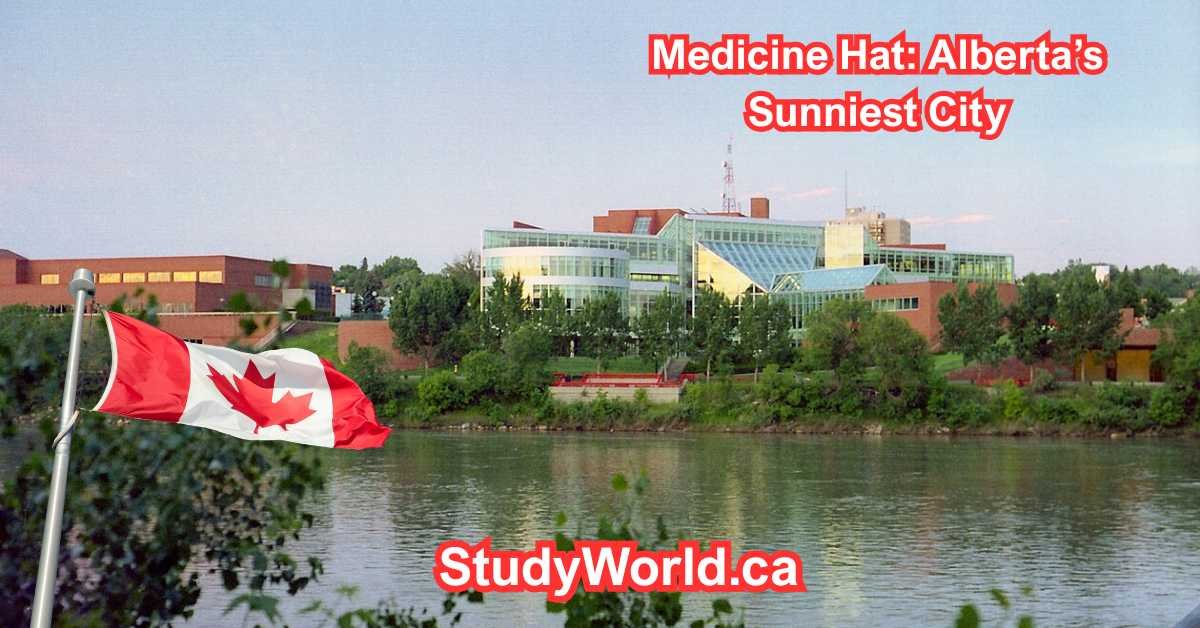
Medicine Hat sits in the southeast corner of Alberta, a few hours from Calgary, and it likes to call itself “Canada’s Sunniest City.” That’s not just marketing — it genuinely does log more sunshine hours than almost anywhere else in the country. But the sunshine turned out to be the least interesting thing about it. What stuck with me was the mix: a city that spent a century digging natural gas out of the ground and firing pottery kilns, now quietly reinventing itself with galleries, indie coffee shops, and a surprising amount of creative energy for a place this size.
If you’re driving the Trans-Canada and thinking about skipping past it toward Calgary or the Rockies, here’s my case for stopping.
It Started With Gas, Not Sunshine
Long before anyone called it the Sunniest City, Medicine Hat was known as “the Gas City” — and for good reason. Explorers hit a massive natural gas reserve under the prairie here well over a century ago, and that discovery basically built the town. Rudyard Kipling supposedly visited in the early 1900s and joked that the city had “all hell for a basement,” which the locals apparently loved enough to keep repeating for the next hundred years.
You can still feel that industrial backbone if you know where to look — old brick buildings, a skyline that isn’t trying too hard, a practicality to how the streets are laid out. But the gas industry isn’t really the main character anymore. These days it shares the stage with renewable energy projects and a genuinely active arts scene, and the contrast is part of what makes walking around downtown interesting. You’ll pass a hundred-year-old warehouse and find a ceramics studio inside it.
The Tallest Tepee in the World (Yes, Really)
You can’t really talk about Medicine Hat without mentioning the Saamis Tepee, and I’ll admit I went in expecting a bit of a roadside-attraction gimmick. It’s not that. It’s enormous — tall enough that you see it from the highway before you see much of anything else — and it was actually built for the 1988 Calgary Winter Olympics before being moved here afterward.
What changed my mind about it was standing underneath it on a windy afternoon. There’s a sound the wind makes moving through the metal framework, almost a low hum, and it’s oddly affecting when you’re standing there reading the interpretive panels about Blackfoot and First Nations history along the base. The site overlooks the South Saskatchewan River valley, and if you time it for late afternoon, the light does something genuinely beautiful to the whole scene. Bring a camera. Or don’t, and just stand there for a few minutes — I regretted rushing through it the first time and went back the next morning specifically to slow down.
Medalta: Where the Kilns Used to Run All Night
The part of the city that surprised me most wasn’t a single landmark — it was an entire neighborhood, the Historic Clay District, and specifically a spot called Medalta. This used to be the industrial heart of the pottery trade here, powered by all that cheap natural gas, and at one point Medicine Hat pottery was shipped across the country.
Now it’s a National Historic Site, and instead of feeling like a museum you walk through quietly, it’s alive — working studios, artists who’ll happily talk your ear off about their kiln techniques, brick walls that still have soot marks from decades of firing. I lost track of time in there, which almost never happens to me at a “historic site.” If you’re the type who likes making things with your hands rather than just looking at them, check whether they’re running an evening ceramics workshop while you’re in town. I wish I’d booked one instead of just watching.
Downtown, Slowly
Downtown Medicine Hat isn’t trying to be a big-city downtown, and that’s exactly its appeal. It’s the kind of place where you end up moving slower than you planned to, not because there’s nothing to do, but because nobody’s rushing you.
I ducked into Inspire Café mostly to get out of the wind, and ended up staying for an hour because the walls were covered in local art and nobody seemed to mind me lingering over one cup of coffee. Madhatter Roastery, a short walk away, had its own version of the same warmth — different crowd, same unhurried feeling. In between, there are independent bookstores, small galleries, and on the right day, a community market where you can tell the vendors actually know most of their customers by name.
If your trip lines up with a Thursday in summer, look up the Downtown Thursday Market. It’s loud in the good way — live music, food stalls, kids running around — and it’s one of those events that tells you more about a town’s actual character than any landmark can.
Police Point Park, Early in the Morning
I have a rule for myself when I travel: find one quiet, green place and go there before the day gets busy. In Medicine Hat, that place was Police Point Park, a few minutes from downtown but a world away in atmosphere. It’s over 400 acres of trails along the South Saskatchewan River, and it’s apparently one of the better birdwatching spots in the province — I’m no birder, but even I could pick out hawks circling overhead.
I went early, coffee in hand, and rounded a bend to find a small group of deer grazing not far off the path, completely unbothered by me. The cottonwood trees along the trail catch the light in a way that made me stop walking more than once just to look at it. If you can time a visit for fall, when those leaves turn, I’d genuinely rearrange a schedule around it.
Echo Dale: Bring the Kids, or Just Bring a Blanket
A short drive out of town, Echo Dale Regional Park is where a lot of local families seem to spend their summer weekends, and it’s easy to see why. There’s a swimming lake, picnic spots, walking trails, and a small historic farm site that gives you a glimpse of what prairie life looked like in the early 1900s.
What I remember most isn’t any single feature, though — it’s the atmosphere. Families grilling, kids jumping into the lake, cyclists rolling past waving at people they clearly knew. It felt less like a tourist stop and more like getting invited to someone else’s Saturday. Stay until evening if you can. The sunsets over the water are worth the extra hour.
A Beer With a Hundred-Year Head Start
The Medicine Hat Brewing Company first opened its doors back in 1912, closed at some point along the way as these things do, and was revived a century later by people clearly determined to do the history justice. Their Cream Ale and Hatfield Blonde are the ones locals point you toward, and both pair well with the kind of hearty pub food that feels right after a day of walking around outside.
Even if beer isn’t really your thing, it’s worth popping in just for the atmosphere — it’s the kind of place where the bartender remembers regulars’ orders and doesn’t mind explaining the brewing history to a stranger who asks too many questions. Ask about whatever seasonal batch they’ve got going; it’s usually tied to something in the city’s past.
The Esplanade: More Than It Looks From Outside
Perched above the river, the Esplanade Arts & Heritage Centre houses a local history museum, a handful of art galleries, and a working performing arts theatre all under one roof. What struck me wasn’t any single exhibit but how the whole place weaves together — Indigenous history sitting alongside pioneer-era artifacts sitting alongside genuinely contemporary art, without any of it feeling forced together. Check their events calendar before you go; catching a live show or a gallery opening changes the whole visit.
An Hour Away, a Different World Entirely
If you have an extra day, Cypress Hills Interprovincial Park is worth the drive — roughly an hour outside the city, straddling the Alberta-Saskatchewan border. It’s the highest point of land between the Rocky Mountains and Labrador, which sounds like trivia until you’re actually up there and the temperature drops, the trees thicken, and the whole landscape shifts from prairie to something closer to alpine forest.
I stayed for the stars. Cypress Hills is a Dark-Sky Preserve, and I’ve genuinely never seen the Milky Way as clearly as I did lying on a picnic table there one August night. If astronomy interests you even a little, plan to stay past dark.
What Actually Stayed With Me
It wasn’t the sunshine, honestly, even though the city earns that nickname fairly. It was smaller things — how easily people struck up conversation at a coffee counter, how the woman running a market stall remembered my order the second time I walked past, how nobody in this city seemed to be in a hurry to prove itself to visitors.
Medicine Hat isn’t going to compete with Banff or Calgary for name recognition, and I think that’s precisely why it’s worth the detour. It rewards people willing to slow down for a couple of days rather than check a box and move on.
If you’re mapping out a road trip through Alberta, my honest advice: don’t just pass through. Wander the trails at Police Point in the morning, spend an afternoon getting lost in Medalta’s studios, grab a Cream Ale downtown, and watch the sun go down from the riverbank at Echo Dale. By the time you’re back on the highway, you’ll understand why a city with a slightly strange name ended up being one of the trip’s better surprises.
With sunshine and smiles, Octavia O.